
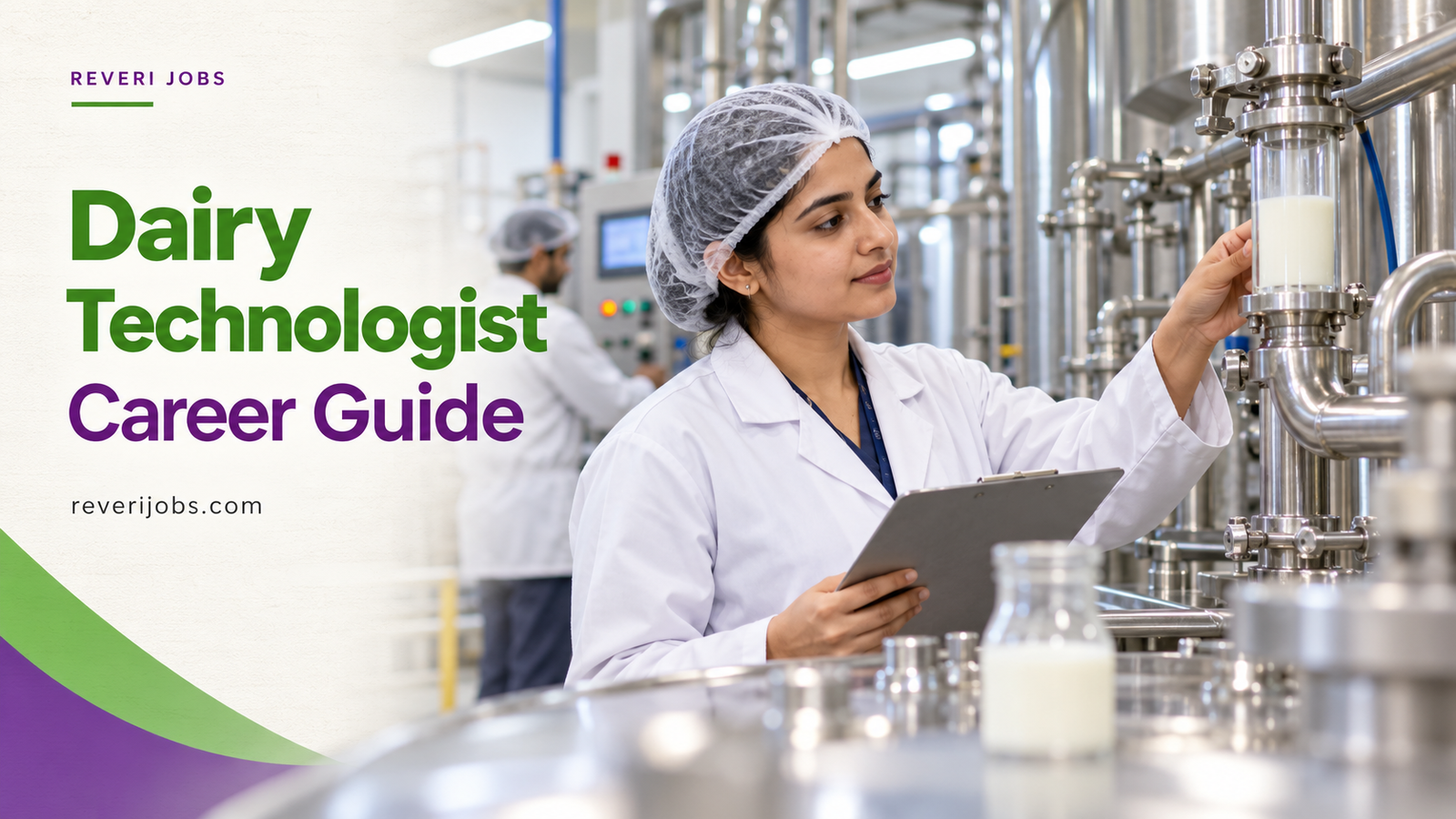
A dairy technologist applies food science and process knowledge to dairy products. Depending on the employer, the role may involve production support, quality checks, product development or technical coordination. Understanding the function matters more than relying on the title alone.
Milk, fermented products, cheese, butter and milk powders involve different operations. A candidate who understands the product category and the actual responsibilities can prepare a more useful application than someone sending the same profile to every dairy vacancy.
Production roles focus on executing the approved process, recording operating conditions and coordinating the shift. Quality roles may involve sampling, testing, document review or management system activities, according to the job description.
Development roles can involve trials, formulation records and product evaluation. Technical service roles may work with ingredients, equipment or customers. One employer may combine several tasks in a single position; another may have separate teams. Ask how the work is divided.
Review the purpose of the processes relevant to the vacancy, such as heat treatment, homogenisation, fermentation, separation or drying. Explain what a process achieves and how it is monitored rather than memorising isolated terms.
Operating conditions are not interchangeable between products and plants. Use the approved process and specifications for the site. In an interview, avoid presenting a single time and temperature combination as suitable for every dairy product.
Cleaning, hygienic handling and traceability are also relevant areas of understanding. Learn how a site's records connect ingredients, processing and finished goods. If you have only studied the process academically, distinguish that knowledge from plant operating experience.
A hiring manager may ask about an unexpected test result or an inconsistent finished product. Start with what you would verify: the sample identity, method, record and relevant operating information. Then explain how you would notify the responsible team and follow the deviation procedure.
Do not jump directly to changing the recipe or releasing the batch. A sound answer recognises that the cause needs investigation and that decisions must stay within your authority. Production, quality and maintenance may all contribute evidence.
Read the qualification requirement exactly. Employers may request dairy technology, food technology, microbiology, chemistry, engineering or another background depending on the function. A degree accepted for one role is not automatically accepted for every dairy position.
If your coursework included relevant practical work, describe it clearly. Explain the objective, the method you learned and your own contribution. List instruments and equipment only when you can discuss your actual level of familiarity.
Choose a real project or training experience. You might discuss a supervised fermentation practical, a product evaluation project or a production documentation exercise. State what you did and what you observed.
For a learning project, explain the limits. A small laboratory exercise does not establish commercial shelf life or validate a factory process. That distinction shows judgement and makes your account more credible.
Dairy plant jobs may involve shifts, production areas and site specific hygiene requirements. Ask about induction, supervision, protective equipment and the working schedule. Confirm the exact location, because a company's office and processing plant may be in different places.
Also ask which products you will work on and how your performance will be assessed. Someone seeking development experience should establish whether the job includes trials or primarily routine production work. Both can be valuable, but they lead to different learning opportunities.
Use several relevant titles, including dairy technologist, production executive, quality executive and product development executive. Read the descriptions to identify dairy specific responsibilities. A broad food industry portal can contain both suitable and unrelated jobs under similar titles.
On Reveri Jobs, review current food industry vacancies and match your application to the employer's stated requirements. If a dairy role is not currently available, keep your profile accurate and check again rather than applying indiscriminately to every technical position.
Internal links: Link the CTA to https://www.reverijobs.com/jobs. Link the existing QA versus QC article when explaining different quality functions. Add a dairy jobs hub link only when it exists and contains genuine relevant information.
Search the CMS for each focus keyword, topic and proposed slug before publishing. Use one canonical URL per article, a single article H1, descriptive H2s, and a real author. Replace publishing notes with live contextual links. Use BlogPosting structured data that matches the visible author, dates, title and image. Set actual publication dates; change the modified date only when the content changes. Do not force a keyword density or add unsupported salary, certification, employer or hiring claims.
