
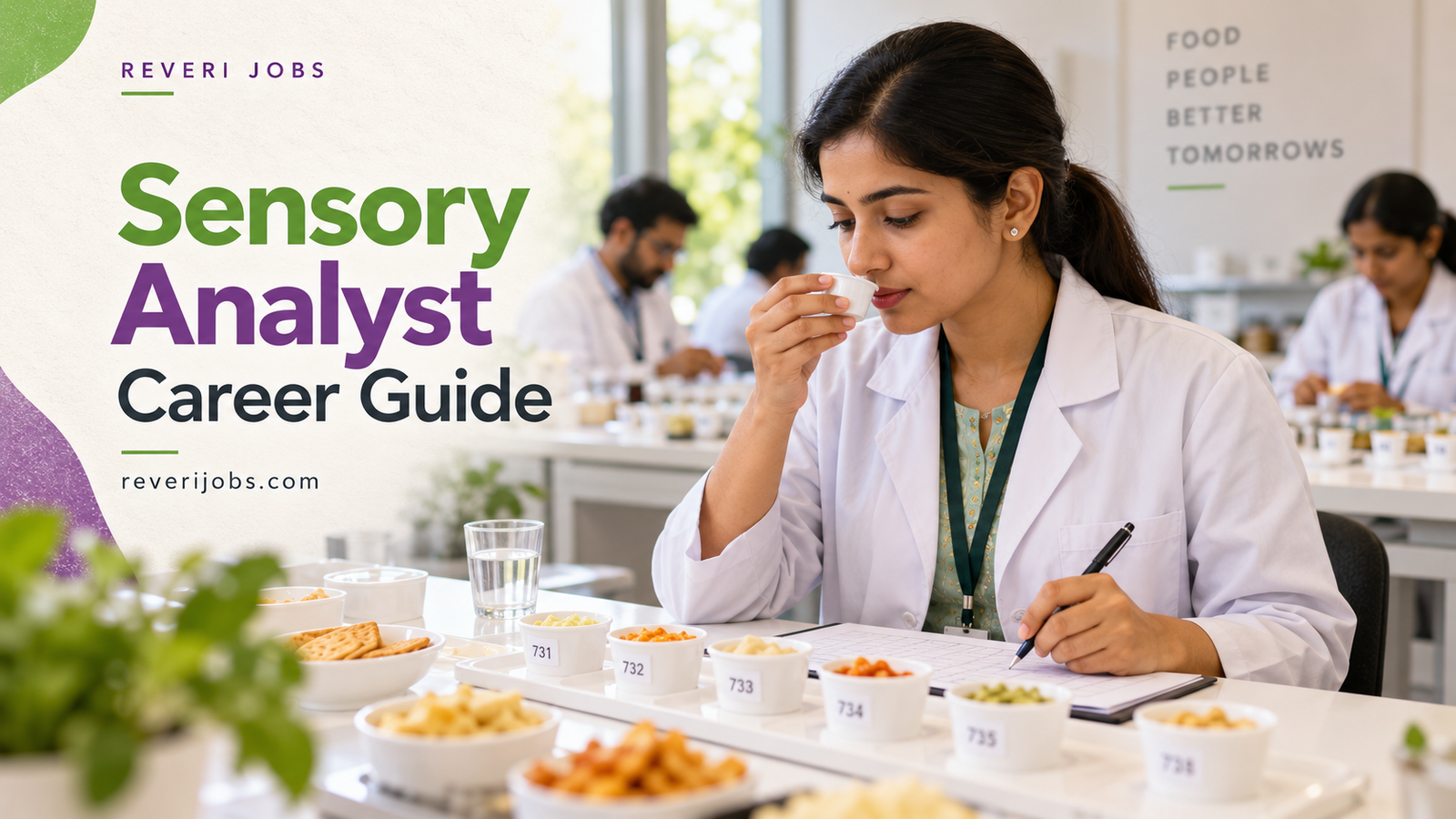
A sensory analyst helps a food business understand how products are perceived through appearance, aroma, taste and texture. The work involves organised testing and careful interpretation, rather than deciding whether one person likes a sample. It can support product development, quality investigations and comparisons between formulations.
If you enjoy food science, structured observation and working with data, sensory analysis may be a useful career direction. Job titles vary: relevant responsibilities may sit within sensory science, consumer insights, quality or research and development teams.
The day often begins with a question. Has a recipe change altered the product? Are two batches noticeably different? Which texture descriptions best distinguish the samples? The analyst helps choose a test that can answer that question.
Tasks may include preparing coded samples, planning serving order, briefing participants, recording responses and checking the dataset. Depending on seniority, the analyst may also coordinate panels and explain findings to colleagues. Test design and interpretation usually involve collaboration with an experienced sensory lead or researcher.
Discrimination tests examine whether samples can be distinguished under defined conditions. Descriptive work characterises sensory attributes, often using a trained panel. Consumer acceptance testing explores responses from people relevant to the intended market.
These approaches answer different questions. A result from a small classroom tasting should not be presented as proof of nationwide consumer preference. Likewise, a detected difference does not tell you which product customers prefer. Explaining those limits is an important part of the role.
Careful sample handling matters. Coding, serving conditions and instructions should reduce avoidable bias. You need to follow the study protocol consistently and keep track of which sample each response belongs to.
Spreadsheet skills help with checking entries, organising results and preparing clear charts. Basic statistics supports interpretation, but software output alone does not make a study valid. You should be able to explain the question, the method and the limitations in plain language.
Communication also matters. Instead of saying “the new product is better,” describe the measured result and what the study can support. A production or marketing colleague should understand both the finding and the next decision it informs.
With appropriate supervision and participant consent, create a learning project using safe, suitable food samples. Do not use unknown, expired or potentially unsafe materials. Check dietary restrictions and allergies before anyone participates.
Write a short brief covering the question, sample preparation, coding, serving order, instructions and planned analysis. Record what happened, including missing responses or departures from the plan. Present the findings with their limits.
For example, a student project might explore whether participants distinguish two approved formulations. The portfolio should explain why that question was chosen and why the sample size limits interpretation. Label it as a learning exercise; do not present it as commercial research or invent a client.
Look beyond the job title. Check whether the employer needs routine sample coordination, trained panel management, statistical analysis or consumer research. These responsibilities can require different levels of experience.
Notice the product category too. Beverage, dairy and snack projects may involve different preparation and handling requirements. Tailor your application around relevant coursework and genuine projects. Avoid claiming panel leadership when your experience was participation in a class practical.
Expect questions such as: “How would you reduce bias in sample presentation?” or “What would you do if the results were inconsistent?” Explain that you would review the protocol, serving conditions, participant instructions and data quality before drawing a conclusion.
Be comfortable saying that a study needs specialist input. A good analyst knows when the available evidence is insufficient. Employers can assess your judgement more easily when you explain uncertainty clearly.
Search across sensory, consumer insights and R&D vacancies, then compare their requirements with your training. Some positions require advanced study or substantial practical experience; others include supervised coordination work.
Browse current food industry opportunities on Reveri Jobs. Use a clear project summary to show how you approach a testing question, and check that any vacancy you apply to is still accepting applications.
Internal links: Link the CTA to https://www.reverijobs.com/jobs. Link the existing food product development scientist article where R&D is mentioned. Link the R&D jobs hub only after it is live and verified.
Search the CMS for each focus keyword, topic and proposed slug before publishing. Use one canonical URL per article, a single article H1, descriptive H2s, and a real author. Replace publishing notes with live contextual links. Use BlogPosting structured data that matches the visible author, dates, title and image. Set actual publication dates; change the modified date only when the content changes. Do not force a keyword density or add unsupported salary, certification, employer or hiring claims.
